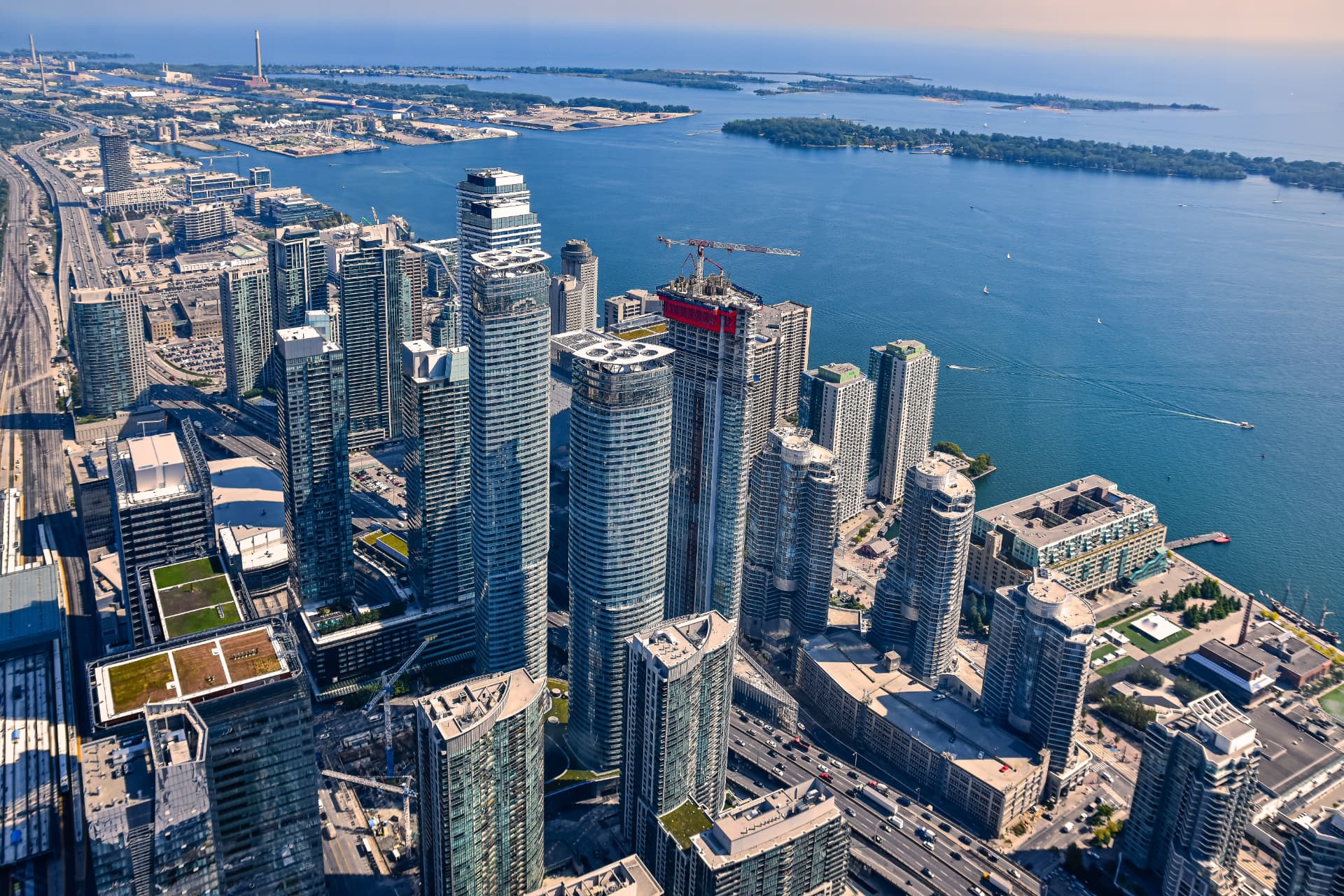
Vancouver has a reputation as a rainy city, and that's true — but only partly. Rain is concentrated between November and March; from June to September, the city enjoys one of the most pleasant summers on the continent, with long days, low humidity and temperatures rarely above 27°C.
The answer to 'best time to visit' depends on what you want to see. Here's an honest picture of each season.
Summer (June to September): peak season
This is the best window for first-time visitors. Highs run between 21°C and 26°C, rain is scarce and the sun sets around 9 pm — which stretches your sightseeing day considerably. All the mountain attractions are open, the ferries to Victoria run more frequently, and the road to Whistler is snow-free.
The trade-off is that hotels cost more and attractions get crowded. June and the first half of September are the perfect middle ground: summer weather, with smaller crowds and lower prices.
- Average temperature: 15°C to 26°C
- Best for: Alaska cruises, Whistler, Victoria, beaches
- Book hotels 3 to 4 months in advance
Fall (October and November): colours and calm
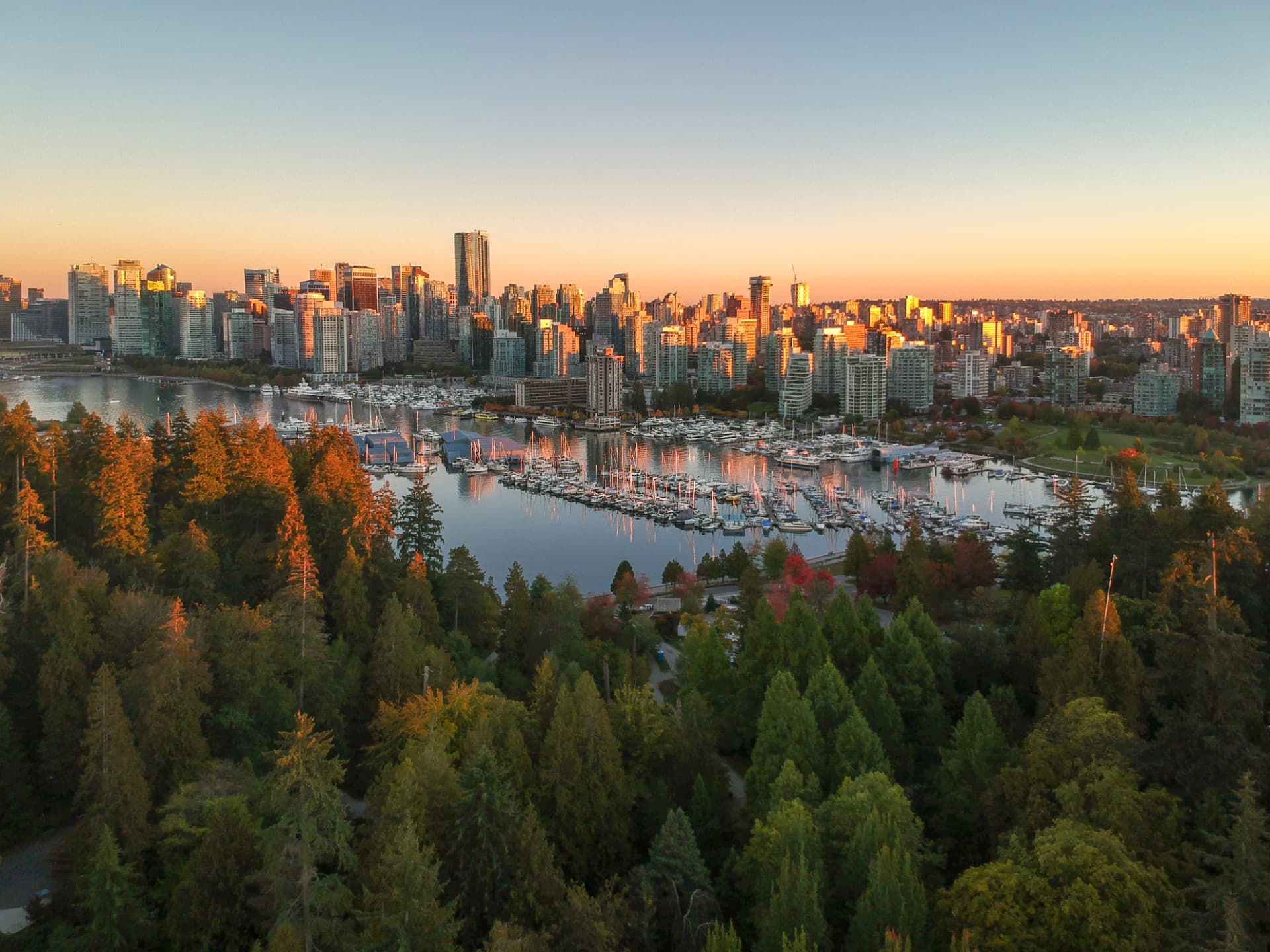
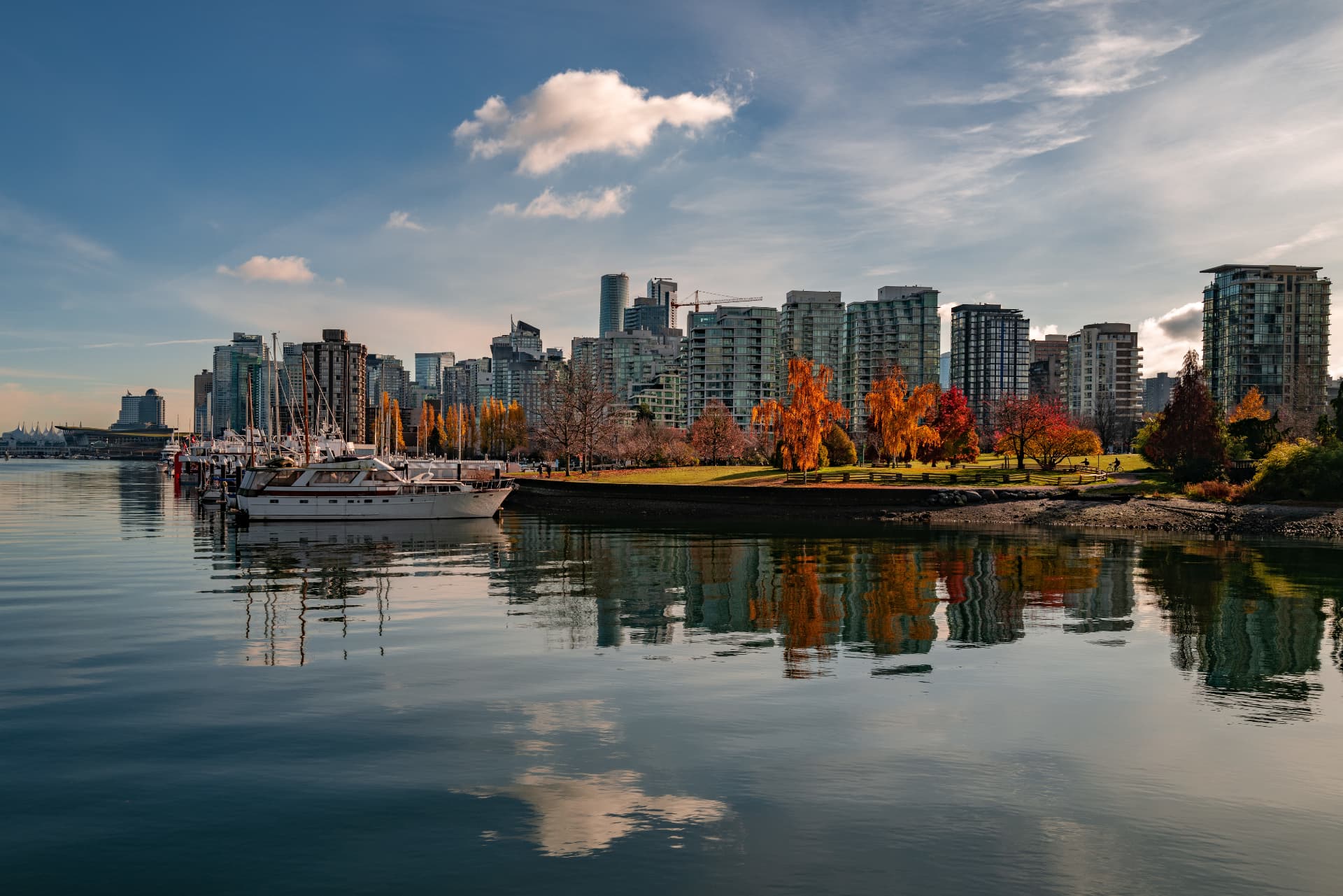
October is underrated. The leaves in Stanley Park and Queen Elizabeth Park turn red and gold, prices drop significantly and the city goes back to being for locals. There are still plenty of sunny days, with highs around 13°C.
From November on, rain takes over and afternoons get dark early. It's a good month for museums, dining and short outings, not for long hikes.
Winter (December to February): snow in the mountains, rain in the city
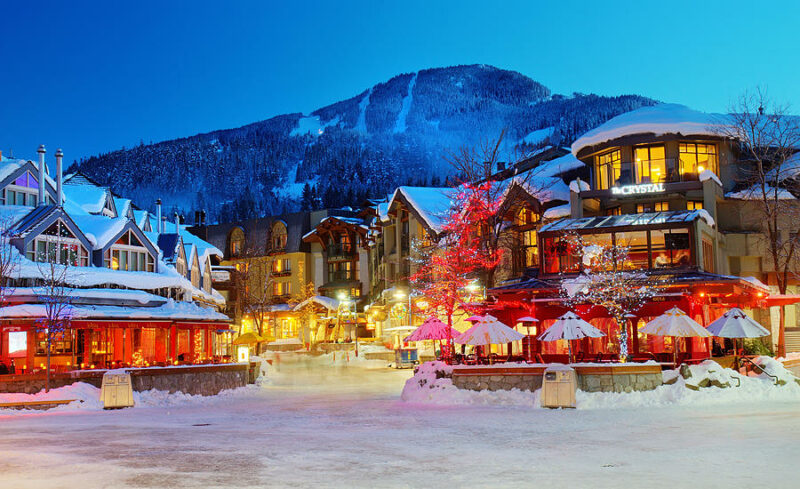
Vancouver is one of the few cities in the world where you can see the sea without snow and, 20 minutes away, go skiing. Downtown, winter is mild — between 2°C and 8°C — and wetter than it is cold. On the North Shore mountains and in Whistler, it's full snow season.
December has extra charm: Christmas markets, Bright Nights at Stanley Park and the lights on Grouse Mountain. It's the best time of year for families who want to see snow for the first time without the extreme cold of eastern Canada.
- Average temperature: 2°C to 8°C downtown
- Guaranteed snow at Grouse, Cypress and Whistler
- Bring a waterproof jacket, not just a warm coat
Spring (March to May): cherry blossoms
Between late March and mid-April, more than 40,000 cherry trees bloom across Vancouver's streets — and the city holds an entire festival around it. It's one of the most beautiful sights of the year, and almost no one outside the city knows about it.
May already brings 18°C days, open gardens and no crowds. If you want good weather at off-season prices, May is the calendar's best bet.
Quick summary by goal
For an Alaska cruise: May to September. For snow and skiing: December to March. For nature photos with fewer people: September and October. To save money: November, January or February. For good weather at lower prices: May or the second half of September.
FAQ
- Does it rain a lot in Vancouver?
- It rains mainly between November and March. In summer, the city has long dry spells, with July and August among Canada's sunniest months.
- Can you see snow in Vancouver?
- Downtown it rarely snows, but at Grouse Mountain, Cypress and Whistler there's guaranteed snow between December and March, less than an hour from downtown.
- When do the cherry blossoms bloom?
- Between late March and mid-April, usually peaking in the first week of April.
Ready to see Vancouver your way?
Tell us your dates and what you want to see. We'll put together a private itinerary, no strings attached.